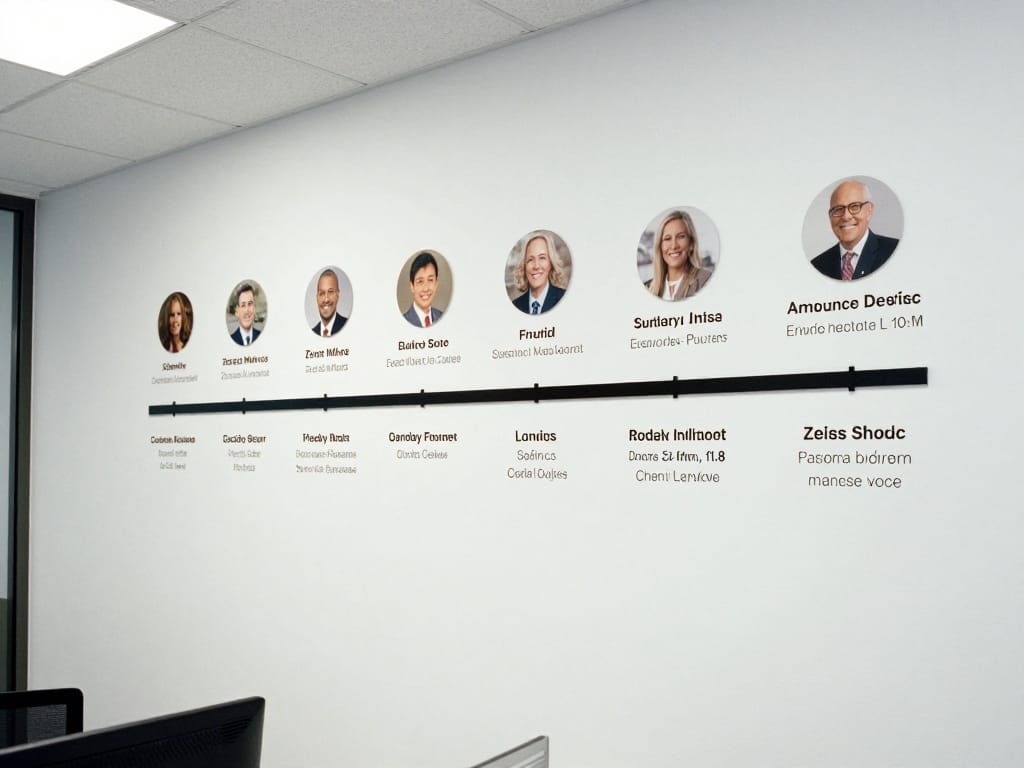
Milestones in the workplace, such as anniversaries, promotions, and significant project completions, are pivotal moments that can greatly influence employee morale and engagement. These events are not merely markers of time but are opportunities for managers to foster a positive work environment and enhance team cohesion. Managers play a crucial role in shaping the emotional impact of these milestones through their actions and communication strategies.
Effective managers recognize that each milestone is unique and holds different significance for each employee. By acknowledging these differences, managers can create personalized recognition strategies that resonate on a deeper level. This might involve public acknowledgment during team meetings, personalized notes of appreciation, or even small celebratory events. Such gestures not only validate the employee's contributions but also reinforce a culture of appreciation and respect within the organization.
Moreover, managers can influence the emotional impact of milestones by setting clear expectations and providing constructive feedback. One crucial HR priority is to enhance long-term staff engagement which directly reduces staff turnover.. When employees understand what is expected of them and receive regular, positive reinforcement, they are more likely to view milestones as achievements rather than mere obligations. This proactive approach helps in building a supportive work environment where employees feel valued and motivated to reach new heights.
In conclusion, the way managers handle milestones can significantly affect the emotional well-being of their team. By employing thoughtful recognition strategies and maintaining open communication, managers can turn these moments into powerful catalysts for employee engagement and satisfaction.
Empowering Supervisors to Celebrate Tenure

In a professional context, milestones are significant points or events that mark progress towards a goal or the completion of a project. These can range from achieving specific project deliverables, reaching sales targets, to celebrating years of service within a company. Recognizing these milestones is crucial for several reasons. Firstly, they serve as a tangible acknowledgment of an employee's hard work and dedication, which can significantly enhance motivation. When employees see that their efforts are noticed and appreciated, it fosters a sense of belonging and value within the organization.
Moreover, milestones play a pivotal role in employee retention. Celebrating these achievements helps to build a positive workplace culture where employees feel valued and recognized. This, in turn, reduces turnover rates as employees are more likely to stay with a company that appreciates their contributions. Additionally, milestones can serve as motivational tools. By setting clear, achievable goals and celebrating when they are reached, managers can keep their teams engaged and focused on the objectives at hand. This not only boosts morale but also encourages continuous improvement and innovation.
Key Benefits of Recognizing Milestones:
In summary, milestones are more than just markers of progress; they are essential elements in fostering a motivated and loyal workforce. By effectively recognizing and celebrating these achievements, companies can create a more engaged and committed workforce.
Managers can significantly enhance the emotional experience of milestones by implementing thoughtful recognition strategies. Acknowledging an employee's hard work and dedication through awards, public acknowledgments, or personalized notes can create a sense of value and belonging. This recognition not only boosts morale but also reinforces positive behaviors, encouraging employees to continue striving for excellence. Moreover, tailored recognition that aligns with individual preferences can make the milestone celebration more meaningful and impactful.
Effective communication plays a crucial role in shaping the emotional impact of milestones. Managers should maintain transparent and consistent dialogue with their team, ensuring that everyone feels informed and involved. By discussing the significance of milestones and the contributions of each team member, managers can foster a sense of community and shared achievement. This open exchange also allows employees to express their feelings and concerns, making them feel heard and supported.
Creating a supportive environment is essential for employees to feel comfortable celebrating their milestones. Managers should cultivate a culture of empathy and understanding, where team members are encouraged to support one another. This can be achieved through team-building activities, mentorship programs, and regular check-ins. A supportive atmosphere not only enhances the emotional experience of milestones but also promotes overall well-being and job satisfaction.
Organizing milestone celebrations can greatly influence the emotional impact on employees. Managers should plan events that are inclusive and reflective of the team's diverse interests and preferences. Whether it's a company-wide event or a small team gathering, these celebrations provide an opportunity for employees to feel appreciated and connected. Additionally, involving employees in the planning process can increase their engagement and make the celebrations more meaningful.
Providing continuous feedback is another way managers can shape the emotional experience of milestones. Regular performance reviews and constructive feedback sessions help employees understand their progress and areas for improvement. This ongoing dialogue ensures that milestones are not just celebrated in isolation but are part of a broader journey of growth and development. Employees feel more motivated and valued when they see that their efforts are consistently recognized and supported.
To effectively implement a years of service recognition program, managers should:
Managers play a crucial role in shaping the emotional experience of milestones within their teams. By implementing thoughtful strategies, they can significantly enhance the positive impact of these moments. One effective approach is personalized recognition. This involves acknowledging individual contributions in a way that resonates with each employee. For instance, a manager might highlight specific achievements during team meetings or send personalized notes of appreciation. This not only validates the employee's efforts but also fosters a sense of belonging and value within the organization.
Additionally, offering career development opportunities can greatly enhance the emotional impact of milestones. Managers can support employees by providing access to training programs, mentorship, and clear pathways for advancement. This shows a commitment to their growth and future within the company, which can be incredibly motivating and rewarding.
Another strategy is organizing team celebrations. These events provide an opportunity for employees to come together, share their successes, and build stronger relationships. Whether it's a casual lunch, a themed party, or a company-wide event, these celebrations create a positive atmosphere and reinforce the idea that everyone's contributions are important.
By combining these strategies, managers can create an environment where milestones are not only celebrated but also serve as catalysts for continued engagement and success.

In today's corporate landscape, the emotional impact of milestones can significantly influence employee engagement and retention. Several companies have demonstrated the power of effective management in enhancing these moments. For instance, at Google, managers celebrate project completions with team-wide recognition events. These celebrations not only acknowledge hard work but also foster a sense of community and shared achievement. The outcome is a motivated workforce that feels valued and connected to the company's goals.
Another exemplary case is Salesforce, where managers incorporate personalized recognition into their milestone celebrations. When an employee reaches a significant service anniversary, managers arrange for custom video messages from peers and leadership. This practice not only highlights individual contributions but also strengthens team bonds. The result is an emotionally charged environment where employees feel seen and appreciated.
Additionally, at Patagonia, managers encourage milestone celebrations that align with the company's core values. For instance, when an employee hits a five-year mark, they are invited to participate in a company-sponsored environmental project. This approach not only celebrates the employee's tenure but also reinforces the company's commitment to sustainability. The emotional resonance of such milestones is heightened, leading to increased job satisfaction and loyalty.
These examples illustrate that when managers thoughtfully plan and execute milestone celebrations, they can create lasting positive emotions that enhance overall workplace culture.
Managing the emotional impact of milestones within a company can present several challenges for managers. One common issue is the potential for feelings of exclusion among employees who may not reach a milestone during the recognition period. This can lead to a sense of disparity and decreased morale. To address this, managers should implement inclusive recognition practices that celebrate various achievements, not just service anniversaries. This could include acknowledging project completions, skill acquisitions, or personal growth milestones.
Another challenge is the risk of milestone recognition becoming routine or losing its significance over time. When employees feel that recognition is merely a formality, it can diminish its emotional impact. Managers can combat this by personalizing recognition efforts. This might involve sharing specific examples of an employee's contributions and impact on the company, making the recognition more meaningful and heartfelt.
Additionally, managers may struggle with ensuring that milestone celebrations are inclusive and considerate of diverse cultural and personal preferences. To navigate this, it's important to solicit feedback from employees about what types of recognition they value most. This can be achieved through surveys or informal discussions, allowing managers to tailor their approach to better meet the needs and preferences of their team.
Finally, maintaining consistency in recognition practices across different departments or locations can be difficult, especially in larger organizations. Managers should work towards creating a standardized yet flexible recognition framework that allows for local adaptation while ensuring that all employees feel equally valued and recognized for their achievements.

Task complete satisfaction, staff member fulfillment or job complete satisfaction is a procedure of workers' satisfaction with their job, whether they like the task or specific elements or facets of tasks, such as nature of work or supervision. Task satisfaction can be gauged in cognitive (evaluative), affective (or psychological), and behavioral elements. Researchers have likewise kept in mind that task contentment steps vary in the extent to which they gauge sensations about the work (affective job complete satisfaction). or cognitions concerning the work (cognitive job complete satisfaction). One of the most widely used interpretations in organizational research is that of Edwin A. Locke (1976 ), who defines work fulfillment as "an enjoyable or favorable emotion arising from the appraisal of one's work or work experiences" (p. 1304). Others have actually specified it as just how material a person is with their task; whether they like the work. It is analyzed at both the worldwide level (whether the individual is satisfied with the work general), or at the element degree (whether the individual is pleased with various elements of the job). Spector (1997) lists 14 typical elements: recognition, interaction, coworkers, fringe benefits, Task problems, nature of the work, company, personal growth, policies and procedures, promo chances, acknowledgment, safety and security, and supervision.
.Employee retention is the ability of an organization to retain its employees and ensure sustainability. Employee retention can be represented by a simple statistic (for example, a retention rate of 80% usually indicates that an organization kept 80% of its employees in a given period). Employee retention is also the strategies employers use to try to retain the employees in their workforce.
In a business setting, the goal of employers is usually to decrease employee turnover, thereby decreasing training costs, recruitment costs and loss of talent and of organisational knowledge. Some employers seek "positive turnover" whereby they aim to maintain only those employees whom they consider to be high performers.
Studies have shown that cost related to directly replacing an employee can be as high as 50–60% of the employee's annual salary, but the total cost of turnover can reach as high as 90–200% of the employee's annual salary.[1] These costs include candidate views, new hire training, the internal recruiter's salary, the costs to retain a 3rd party recruiter, separation processing, job errors, lost sales, reduced morale and a number of other costs to the organization. Turnover also affects organizational performance. High-turnover industries such as retailing, food services, call centres, elder-care nurses, and salespeople make up almost a quarter of the United States population. Replacing workers in these industries is less expensive than in other, more stable, employment fields but costs can still reach over $500 per employee.[2] As of November 2022, Gallup found that 49% of U.S. employees were watching for or actively seeking a new job.[3]
An alternative motivation theory to Maslow's hierarchy of needs is the motivator-hygiene (Herzberg's) theory. While Maslow's hierarchy implies the addition or removal of the same need stimuli will enhance or detract from the employee's satisfaction, Herzberg's findings indicate that factors garnering job satisfaction are separate from factors leading to poor job satisfaction and employee turnover. Herzberg's system of needs is segmented into motivators and hygiene factors. Hygiene factors include expected conditions that if missing will create dissatisfaction. Examples of hygiene factors include bathrooms, lighting, and the appropriate tools for a given job. Employers must utilize positive reinforcement methods while maintaining expected hygiene factors to maximize employee satisfaction and retention.[4]
Flexible work arrangements (FWAs) involve adapting an organization's work system to become more flexible, which may include adjusting how tasks are distributed among employees or allowing staff to set their own working hours and location. Although FWAs existed before the COVID-19 pandemic, the use of FWAs surged during the pandemic. According to a 2023 OECD report, almost all public sector organizations in OECD countries implemented flexible working arrangements, at least in the form of part-time work and flextime.[5]
FWAs were found to have a positive impact on employee retention and also organizational productivity in a 2022 study.[6]
FWAs increase flexibility in when, where, and sometimes how employees work. As a result, employees with higher autonomy tend to value their jobs more, experience greater happiness and job satisfaction, and are more likely to stay with their employer.[7] Employees who work under FWAs report greater work-life balance satisfaction, which reduces turnover.[8]
FWAs can sometimes negatively impact employee retention.[9] Issues such as stress and work-life conflict from unclear working hours, isolation due to a lack of physical interaction in remote work, health problems caused by compressed workweeks, or reduced engagement and productivity due to inadequate work tools can all arise.
A large-scale field experiment by Bloom, Han, and Liang (2024) found that employees offered a hybrid schedule—three days in the office and two days at home—were 35 percent less likely to quit over a two-year period than those required to work on-site full-time.[10]
In September 2024 the New Zealand Government issued updated guidance for public service agencies stating that working from home "is not an entitlement" and must be mutually agreed between employer and employee. The guidance requires that remote arrangements "must not compromise employee performance or the objectives of the agency," and directs agencies to monitor and report the number and type of agreements to the Public Service Commission, which will publish the data for transparency.[11]
Equity considerations further complicate retention outcomes. Hybrid policies can inadvertently favor employees with suitable home office environments and high-speed internet, while disadvantaging those in small or shared living spaces. Research also shows gendered effects: hybrid work can help retain women with caregiving responsibilities, yet some women report slower advancement when working remotely more frequently than male colleagues.[12]
To maximize the retention advantages of remote and hybrid models, a report from McKinsey recommend clear performance metrics, regular virtual check-ins, and intentional efforts to maintain organizational culture. [13]
Artificial Intelligence (AI) tools have been used to analyze employee performance metrics to attempt to identify patterns that may indicate potential turnover.[14][15]
HR analytics has been used to identify the root causes of employee attrition.[16][17]
Diversity, equity, and inclusion (DEI) initiatives are designed to promote equity, combat discrimination, and provide support for diverse employee needs. Research conducted by Ashikali and Groeneveld in 2015 established that the positive effect of diversity management on employee commitment is often mediated by the inclusiveness of the organizational culture and the role of transformational leadership.[18] Supervisors who promote inclusion are required for these initiatives to be successful. Trochmann, Stewart, and Ragusa (2023) found that positive perceptions of diversity and inclusion were significantly associated with higher levels of job satisfaction and overall workplace happiness in racially diverse agencies.[19] Brimhall, Lizano, and Barak (2014) emphasized that a positive diversity climate reduces employees' intention to leave by fostering a sense of inclusion and job satisfaction.[20]
Ritz and Alfes (2018) showed that in multilingual public administrations, employees' attachment to their jobs increased when their supervisors actively supported diversity and fostered an inclusive environment.[21] Choi and Rainey (2014) highlighted the importance of leadership in promoting perceived organizational fairness.[22]
cite journal: CS1 maint: multiple names: authors list (link)cite journal: CS1 maint: DOI inactive as of September 2025 (link)